




Axis Communications: Manufacturing in America 2026 Spotlight
Join us OCT 28 for Manufacturing in America at Ford Field!
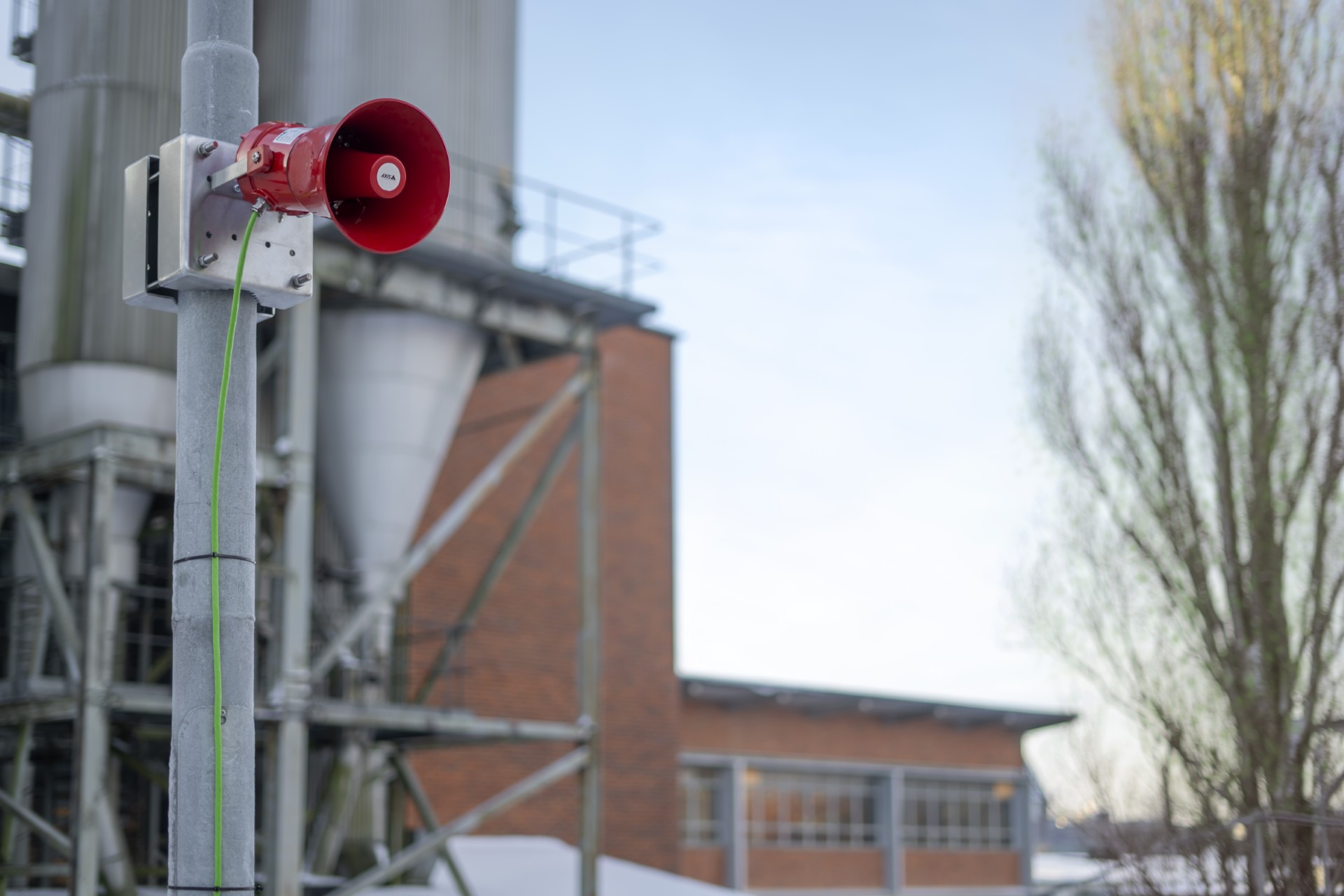
Keeping a manufacturing facility running requires constant coordination. Production teams need to quickly address interruptions. Maintenance teams need visibility regarding equipment conditions. Employees need concise instructions to work safely. Across a large and noisy job site, it can be especially challenging getting that information to the right people at the right time.
3 Ways Implementing Network Audio Promotes Smart Manufacturing
Cameras, onboard sensors, monitoring tools, machinery, and software provide teams with the necessary visibility, but they’re only part of the equation. Connecting these devices with network audio helps teams respond through live announcements and automated alerts. When multiple systems can integrate with audio, they can be an effective tool for helping manufacturers maintain production uptime, address equipment problems, and protect staff.
Challenge #1: Production Uptime
A line jam or process error can disrupt production further along the line. The longer it takes to identify the problem and notify those who are responsible for resolving it, the longer the disruption will last. This is less than ideal, especially when time is of the essence.
Integrated systems and audio can help shorten that response. For example, a camera equipped with suitable analytics could automatically detect a line jam. The accompanying audio capabilities could then trigger a prerecorded message to staff in the affected production area, allowing them to resolve the issue with little downtime.
Register for Manufacturing in America 2026
Live paging capabilities give supervisors another way to coordinate their response as conditions change. They can communicate instructions to an affected area, request further assistance, or provide updates while the issue is being resolved. Remote monitoring adds another layer of support. With access to connected video and audio systems, authorized personnel can review an incident and deliver a live message without even having to travel to the production floor.
Audio zoning can make that communication even more effective. Rather than broadcasting every operational alert throughout the facility, manufacturers can direct their messages to a specific department. This means employees are only receiving information that’s relevant to their specific responsibilities or work areas, allowing other teams to continue working without unnecessary announcements.
Challenge #2: Equipment Maintenance
Equipment maintenance is especially dependent on recognition. Many problems can be resolved by recognizing developing issues and determining how and when to intervene. A timely warning presents an opportunity to investigate an issue before it causes a much more disruptive failure.
Thermometric cameras can support this process by monitoring equipment temperature and detecting when preset thresholds have been exceeded. When integrated with network audio, a temperature alert can trigger a message to personnel in the relevant area. This allows the employee to either act, adapt, or pause their duties until there’s a resolution. The roles of these technologies are complementary; the camera detects the temperature change while audio alerts the staff to investigate.
The communication system itself also requires attention. Remote health monitoring of network audio helps teams identify any devices that need troubleshooting. Manufacturers can make those checks part of their routine maintenance. By being cognizant of a device’s health, teams can assure that operations will continue to operate smoothly.
Challenge #3: Staff Safety
There’s a long list of risks in manufacturing environments. Besides heavy machinery, there are moving vehicles, high-voltage equipment, and chemical storage areas. Clear communication helps employees understand where these hazards exist and any immediate actions that need to be taken. Network audio can deliver scheduled safety reminders to specific zones, reinforcing requirements before a shift or when activities are underway. Similarly, event-triggered messages can address conditions that require more immediate attention.
For example, video analytics can help identify employees who aren’t wearing personal protective equipment. A localized alert can prompt an employee to correct the issue or support supervisors responsible for reinforcing safety practices. These systems can also detect entry into restricted or hazardous areas, triggering a warning with instructions to leave or seek authorization.
Register for Manufacturing in America 2026
In noisy production areas, audio can even be paired with strobes or text displays to ensure alerts are noticed. Planning should account for ambient noise, hearing protection, and the actual locations where employees need to receive important messages.
Connected systems can also support incident reviews. Where the integration supports it, recorded video and audio event logs can assist investigators with establishing what happened and which instructions were issued. This evidence informs training and procedural improvements. And, of course, during a facility-wide emergency, integration with mass notification systems can extend communication across an entire site, helping deliver time-sensitive and coordinated instructions to employees.
Start by Assessing your Facility
Can production alerts properly reach the affected team? Can maintenance warnings prompt timely investigation? Can safety messages reach employees in the areas where they are needed most? The best starting point is to examine how information reaches people at your facility.
Manufacturing Site Assessment Download
The free Manufacturing Site Assessment includes 12 questions to help identify gaps where integrated video and audio could support operations, safety, and security. Reduce operational disruptions and better protect your people and facility when you download the assessment.